
Supporting Science at the Top of the World: EMS in Arctic Expeditions
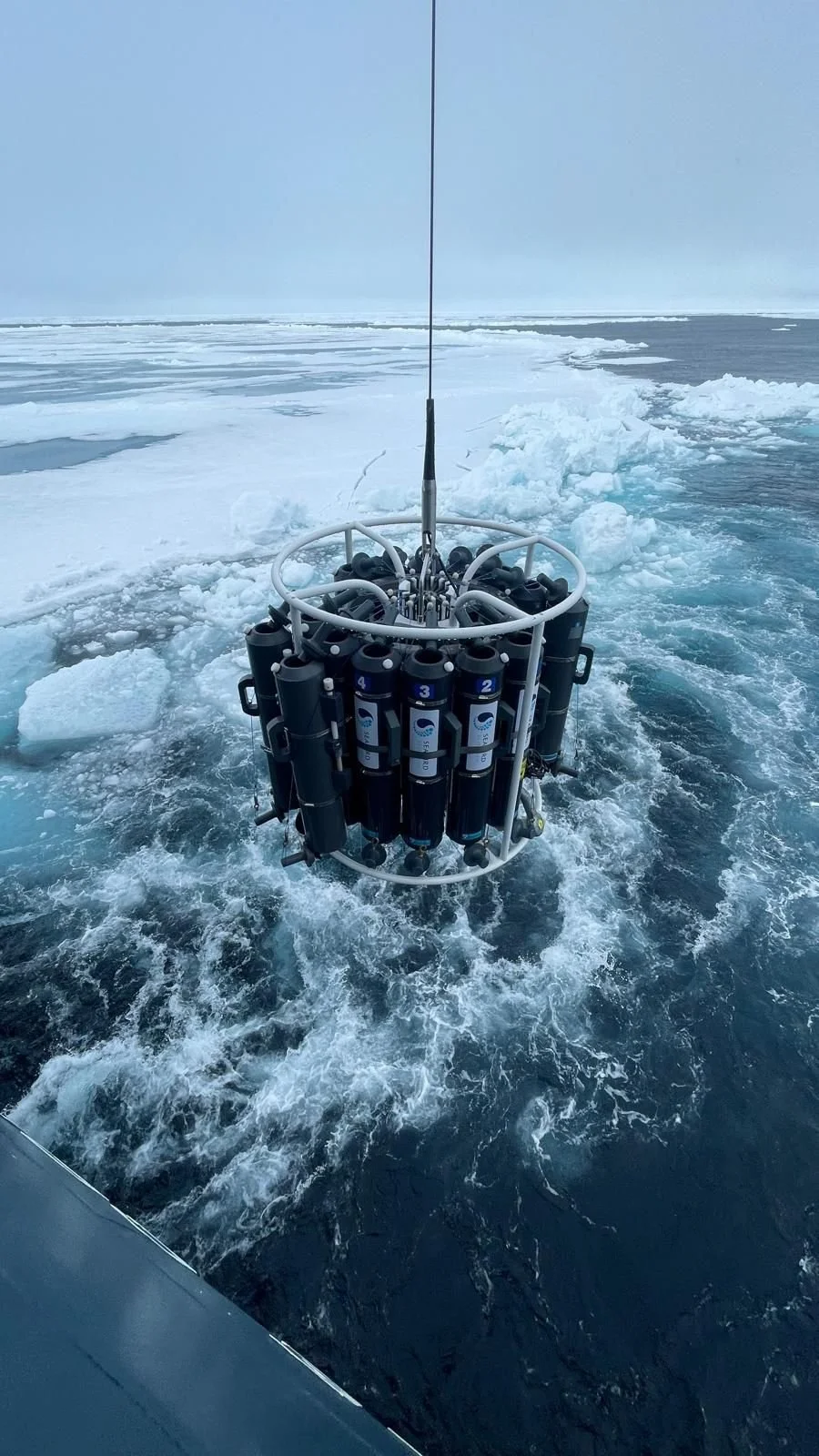
Exploring the Arctic Ocean remains one of the most demanding tasks in oceanographic research. Extreme temperatures, persistent ice cover, and the remoteness of the region make scientific operations complex and logistically challenging. Yet these environments are also among the most critical to study, as the Arctic is experiencing some of the fastest climate changes on Earth.
EMS has had the privilege of contributing to multiple polar expeditions by supporting scientists with oceanographic instrumentation, integration, and operational expertise. One recent example is the Transarctic expedition aboard the research vessel Le Commandant Charcot, where EMS engineering support and instrumentation played a key role in the collection of environmental data across the Arctic Ocean.
The Science Mission
The expedition formed part of the ELENO II project, coordinated by the Institute of Polar Sciences of the Italian National Research Council (CNR-ISP). The project focuses on understanding the physical, chemical, biological, and biogeochemical transformations currently affecting the Arctic Ocean.
Rapid warming, sea-ice decline, and changes in ocean circulation are reshaping Arctic ecosystems. The project aims to generate a long-term dataset to monitor these changes and improve our understanding of processes such as:
Water mass circulation and hydrography
Carbon cycling and nutrient dynamics
Microbial ecosystem activity
Marine mammal presence and ecosystem responses
These measurements contribute to international research efforts such as the Synoptic Arctic Survey, which seeks to characterize the present state of the Arctic Ocean and its ongoing transformation.
Oceanographic Measurements Across the Arctic Basin
During the expedition, a series of CTD (Conductivity–Temperature–Depth) casts were conducted along a trans-Arctic transect, including locations near glaciers, the Arctic ice edge, and the geographic North Pole.
A total of 14 successful CTD stations were completed during the cruise, collecting vertical profiles of the water column from the surface down to depths exceeding 1000 meters.
The CTD systems measured a wide range of oceanographic parameters, including:
Temperature
Salinity
Dissolved oxygen
Chlorophyll-a fluorescence
Light availability (PAR)
Water turbidity
Optical transmission
Redox potential and pH
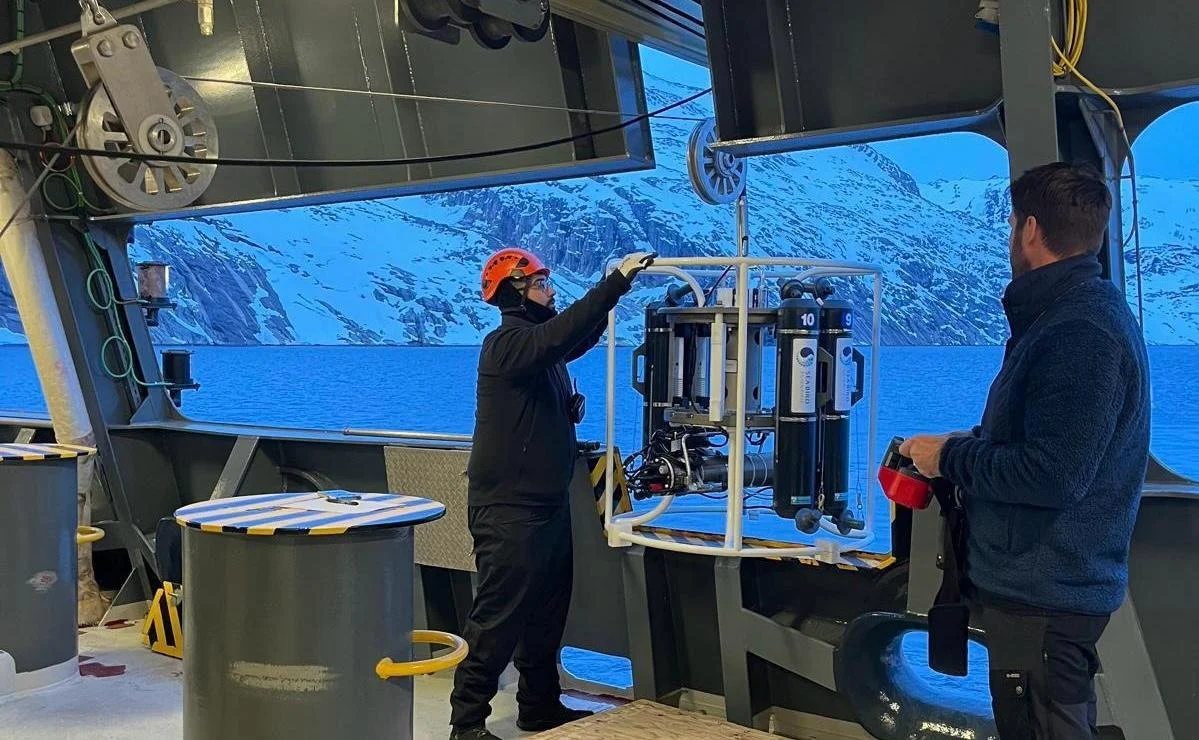
Several auxiliary sensors were integrated into the CTD package to expand the range of observations, including transmissiometers, fluorometers, and nitrate sensors. These instruments allow scientists to build a comprehensive picture of the Arctic water column and its biological activity.
For example, one deep CTD cast conducted near the geographic North Pole reached 1069 meters, providing valuable hydrographic data in a region where observations are extremely scarce.
Data for Climate and Ecosystem Research
The datasets collected during the expedition will support multiple research fields, including:
Arctic climate monitoring
Microbial ecology
Ocean circulation studies
Carbon cycle analysis
Marine biodiversity monitoring
Water samples collected during CTD operations are analyzed for nutrients, microbial abundance, organic carbon, and other biological indicators. Combined with physical oceanographic measurements, these datasets provide insight into how Arctic ecosystems are responding to environmental change.
Such long-term observations are essential to understanding the pace and impact of Arctic climate transformations.
EMS: Supporting Polar Science
With over 30 years of experience in oceanographic instrumentation and system integration, EMS works closely with research institutions, vessels, and scientific teams to ensure reliable data collection even in the most extreme environments.
Polar expeditions require robust systems capable of operating in low temperatures, remote locations, and complex deployment conditions. EMS contributes by providing:
Oceanographic instrumentation expertise
Integration of multi-sensor platforms
Technical support for field deployments
Data acquisition and processing solutions
By supporting missions like the Transarctic expedition, EMS helps scientists gather the high-quality measurements needed to better understand our changing oceans.